MOGADISHU (SD) – The Federal Government of Somalia and the United Nations today formally signed the 2025 Action Plan for Strengthening the Protection of Children Affected by Armed Conflict.
Defence Minister Ahmed Maalin Fiqi signed the plan on behalf of the Somali government. Representing the United Nations were the UN Secretary-General’s Special Representative for Somalia, James Swan, and the UNICEF Representative in Somalia, Sandra Latouf.
This signing signifies a nationwide, ongoing restructuring and enhances accountability for security institutions and the protection of children.
This operational plan builds upon the progress made in recent years and demonstrates the Somali government’s commitment to preventing serious violations against children and to working closely with international partners to ensure the future protection of Somali children.
The signing ceremony was attended by members of the Inter-Ministerial Committee on Children and Armed Conflict (CAAC), which includes the Ministries of Defence, Internal Security, Justice and Constitutional Affairs, and the Ministry of Family and Human Rights Development.
This is not merely a symbolic document but a significant, actionable framework. Signing it at the ministerial level, led by the Defence Minister, demonstrates an intent to institutionalize child protection within the state’s security apparatus. It moves the issue from the realm of human rights advocacy into the core of military doctrine and state policy, marking a potential paradigm shift.
Somalia has long been listed in the UN Secretary-General’s annual report on Children and Armed Conflict for grave violations, primarily attributed to its own forces and allied militias. This plan is a direct and formal response to that scrutiny. By proactively developing and signing it, the government seeks to pre-empt criticism, demonstrate compliance with international norms, and bolster its legitimacy as a responsible actor on the global stage, which is crucial for continued international support.
The presence of the Inter-Ministerial Committee (CAAC) is crucial. It indicates that child protection is being framed as a cross-cutting security and governance issue, not just a social or humanitarian one. Embedding responsibility within the ministries of Defence, Internal Security, and Justice aims to ensure accountability flows through the chain of command and the judicial system, addressing both prevention and prosecution of violations.
Following his strong rebuttal to Trump, this action presents Fqi and the Somali National Army (SNA) as reformists committed to professionalization and international humanitarian law. This serves to reassure international partners providing military training and assistance that their support aligns with human rights principles, potentially safeguarding that vital aid.
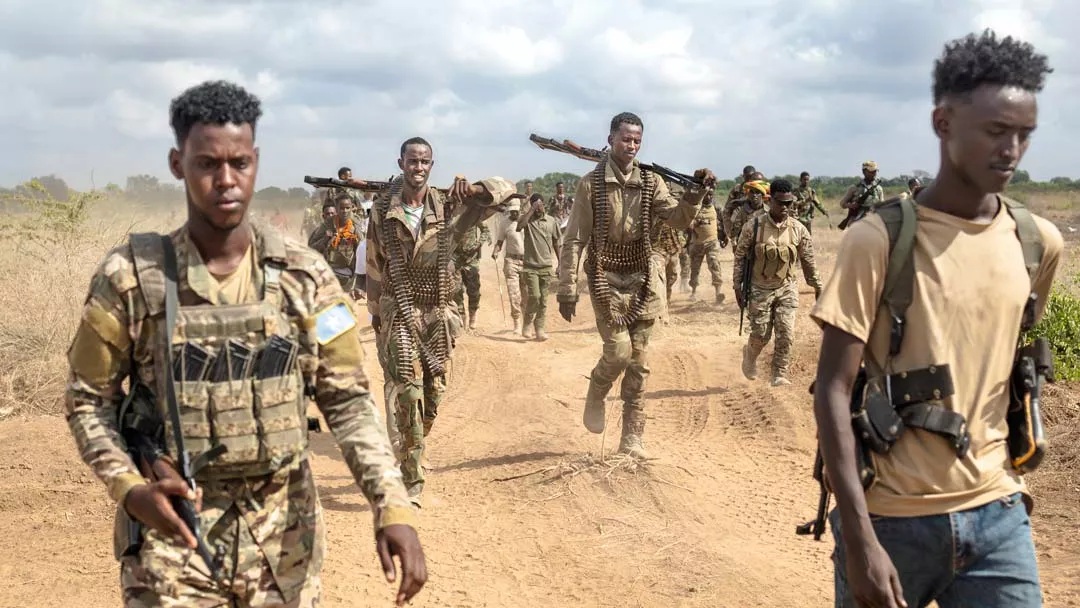
The true test lies in implementation on the battlefield. The plan’s success hinges on effective training and discipline of frontline SNA and allied militia forces. Robust monitoring and reporting mechanisms, likely involving the UN.
Concrete judicial action against perpetrators within the security forces. A major complicating factor remains Al-Shabaab, which is not a party to the plan and continues to systematically recruit and use child soldiers. The government’s ability to protect children in areas of active conflict against such an adversary will be the ultimate measure of the plan’s viability.
This Action Plan is a sophisticated move by the Somali government to convert a point of vulnerability—international criticism over child rights violations—into a pillar of state-building and legitimization. It is a bid to recast the narrative from one of a state with abusive forces to one that is proactively reforming its institutions in line with global standards. Its signing, especially by the defence establishment, is a significant diplomatic and institutional step. However, its legacy will be determined not in conference rooms in Mogadishu, but in the conduct of soldiers in contested districts and the rulings of military courts.
Categories: Latest News