Mogadishu (SD) – At approximately 6:00 PM this evening, polling stations for the Banadir Regional Council elections were officially closed. The announcement was made by the Chairman of the National Electoral Commission, who held a press conference shortly thereafter.
Voting took place across 560 stations, which opened at 6:00 AM this morning. Today’s election was the first of its kind in over 50 years to be held peacefully in 16 out of the 20 districts of the Banadir region.
The election saw significant turnout from the majority of the more than half a million registered voters. It concluded peacefully, with no reported security incidents that disrupted the orderly conduct of the poll.
Major roads in the capital remain largely closed. Security officials state they will remain so until around midnight tonight, with exceptions for security force vehicles. The public moved about on foot.
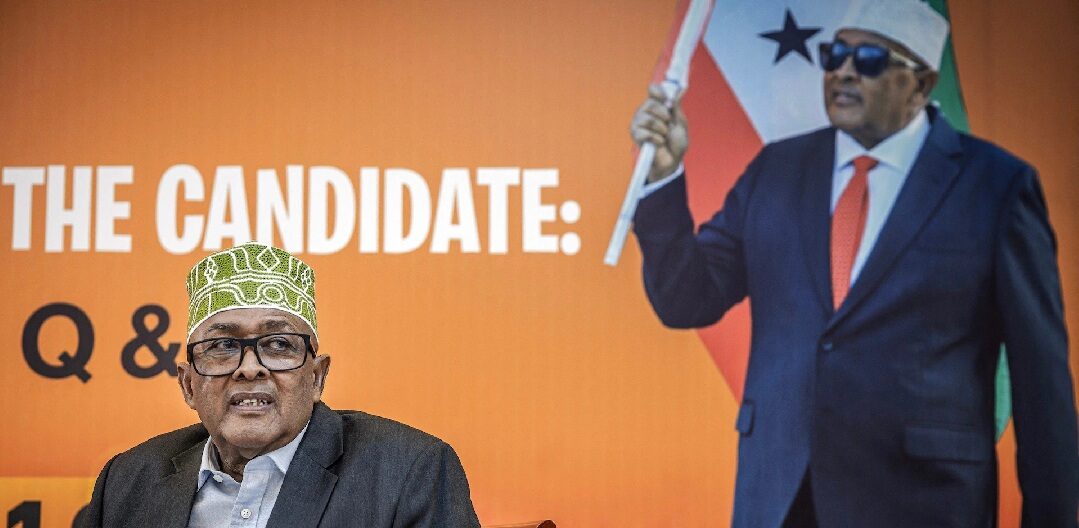
Opposition parties boycotted the election, describing it as a one-sided and unfair process. Conversely, others have hailed it as a major step forward for Somalia on its path toward democracy.
The Chairman of the National Electoral Commission stated that the vote counting process has begun and is expected to be completed within a few days. He extended his gratitude to the Police Force and the residents of the Banadir region for their joint efforts in maintaining security.
The successful and peaceful conduct of the election in Mogadishu is a significant symbolic milestone. Holding the first district-level vote in 50 years without major violence demonstrates a tangible improvement in basic state function and security in the capital. However, the opposition boycott casts a long shadow, framing the exercise as an administrative success but a political failure. It highlights a deep schism between the Federal Government’s institution-building efforts and the political opposition’s acceptance of the process, undermining the election’s claim to full democratic legitimacy.
The extensive closure of the capital’s roads, while ensuring security, reveals the fragile and heavily militarized nature of this “normality.” The fact that a local election requires locking down a major city for a full day illustrates that the state’s control is still enforced through restrictive measures rather than organic public safety. It is a controlled demonstration of capability, not an indication of a fully normalized urban environment.
By boycotting, the opposition (including key federal member states) has chosen to de-legitimize rather than contest the election. This strategy allows them to reject any outcomes and maintain their narrative that the FGS is conducting an exclusionary, unilateral political process. It effectively creates two parallel political realities: one of administrative progress championed by Mogadishu and its allies, and one of political exclusion narrated by the opposition. This deepens the country’s political polarization.
The international community likely views this through a dual lens. On one track, partners like the UN, U.S., and EU will praise the technical and security achievement as a positive step in the Somali-owned electoral timeline. On another track, they will be deeply concerned by the political boycott, recognizing it exacerbates the federal crisis and could derail the more critical national-level “one person, one vote” elections. This may lead to increased diplomatic pressure on the FGS to engage in genuine dialogue with the opposition.
This election serves as a crucial, but limited, pilot project. Its success in the government’s stronghold of Mogadishu does not guarantee it can be replicated in politically contested regions like Jubaland or Puntland. The opposition’s boycott is a stark warning: without a broader political consensus on the electoral model, federal member state cooperation, and security guarantees, the ambitious national elections planned for the future face a high risk of severe disruption or regional non-participation.
The Banadir election is a landmark event that proves the FGS can logistically execute a complex vote in a secure bubble. However, it simultaneously exposes the profound political rift that threatens the entire federal project. The government has won the day but lost the participation of its key rivals. The challenge now is to transform this administrative victory into a bridge for political reconciliation. If it cannot, Somalia risks perfecting the mechanics of elections in a capital city while the country’s political fabric continues to fray, making a nationally accepted outcome increasingly difficult to achieve. The vote count will deliver winners for the Banadir council, but the true result is a nation still searching for a common political ground.
Categories: Latest News