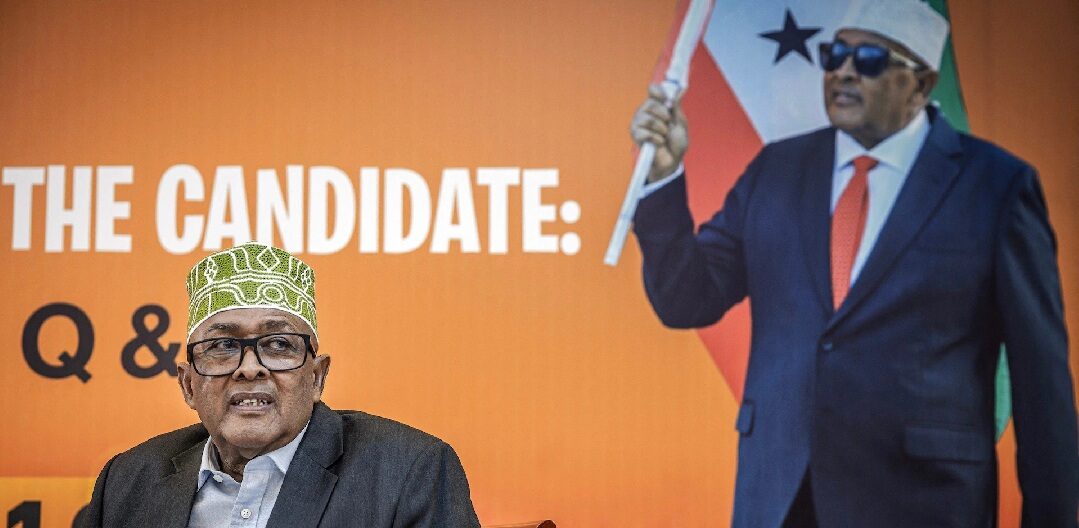
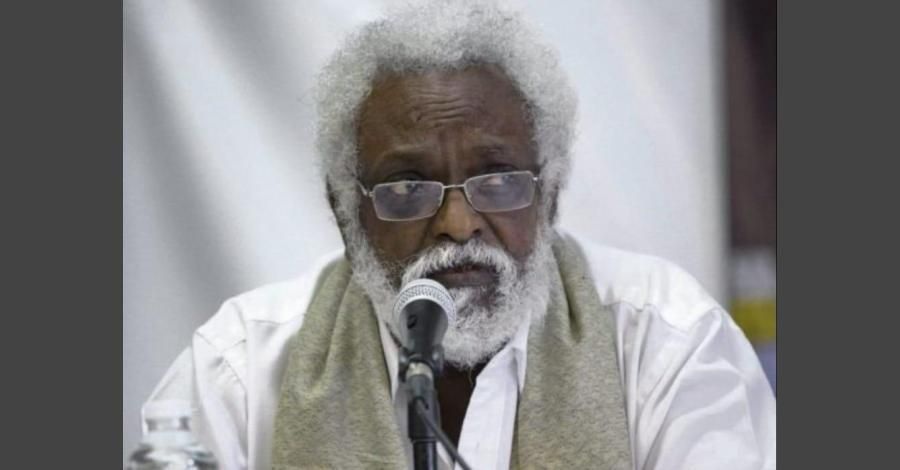
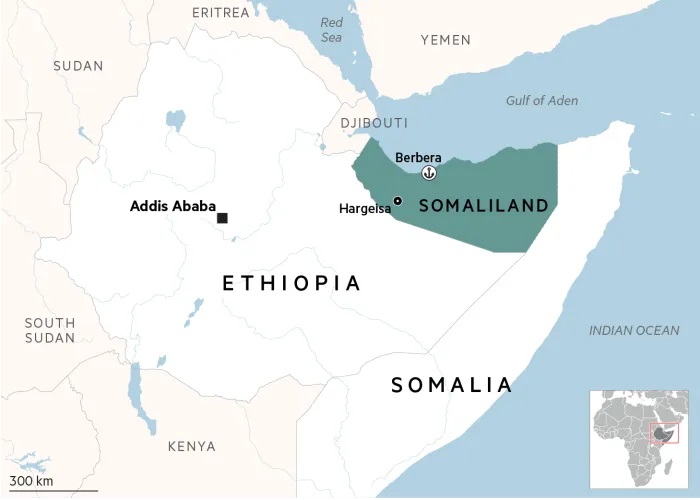
Mogadishu (SD) – Senator Osman Abukar Dube, a member of the Upper House (Senate) of the Federal Parliament of Somalia, has resigned from his seat, stating he has lost hope in the unity of Somalia. He cited what he described as President Hassan Sheikh Mohamud’s animosity towards the community he hails from (Somaliland) and asserted that Somaliland has now achieved success by gaining recognition.
Dubbe’s resignation follows Somaliland’s recognition by Israel. He stated that when he first came to Mogadishu, he believed in Somali unity and wanted to build a strong Somali state, but found the Somali government to be insincere.
“On the day I left Hargeisa, I left behind a large house, two cars, and a job. I came seeking reconciliation. What I found was that the hatred embedded [in Mogadishu] outweighs the responsibility embedded [in governance]. Subsequently, they took away positions, influence, and all property,” he said in an interview with Gaylan Media.
He claimed that politicians in Mogadishu assumed positions of power and then imposed excessive, unpayable debts on the people who brought them to power, ruining everything. He said he advised them to have mercy on the people, but they refused.
“It reached a point where the President would say, ‘We will break their pride.’ We refused. He rules from Badhaadhe to Saylac, with hundreds of soldiers and hundreds of aircraft at his disposal.”
He noted that previously there was a desire to conclude dialogue to resolve the tensions between Somaliland and the Federal Government of Somalia—either to unite or to separate amicably—but that process stalled. Now, Somaliland has taken another path toward recognition after being pressured, and it sees no reason to stay.
“I have stood in Parliament and the roads of Mogadishu for three years, but to what end? To alleviate the suffering of the people of Somaliland? they would constantly respond to me by asking, ‘Have you grown tired of your seat?’ Today, I told the men ruling Mogadishu that conscience is more important than a seat. I have resigned from my seat today, just as my uncles did in 1980.”
He concluded that the issue has gone too far, that there is no way to restore Somali unity today, and that what is needed now is for each to seek their own salvation.
Senator Dube’s resignation is a high-profile political defection from the very institution (the Federal Parliament) meant to represent all Somali regions. His status as a Senator from a Somaliland-associated clan gives his action significant symbolic weight. His narrative—of leaving property and position for a noble cause of unity, only to face discrimination—is a powerful, emotive story that Somaliland secessionists will use as prime evidence to validate their narrative of the impossibility of a fair reunion.
Dubbe frames his resignation not merely as a policy disagreement, but as a personal and moral betrayal. His account of lost property and unheeded advice paints the Mogadishu political elite as corrupt, vindictive, and driven by “hatred.” This personalizes the political conflict, making it relatable and emotionally charged, which is more effective for mobilization than abstract constitutional debates. It reinforces the Somaliland narrative that Mogadishu is a hostile power.
The timing is deliberate. By resigning immediately after the Israeli recognition news, Dube frames that event as a game-changing, irreversible milestone that vindicates Somaliland’s path and makes continued participation in Somali institutions futile. His resignation is presented as a logical consequence: why stay in a union that is both hostile and increasingly irrelevant when your homeland is gaining international standing?
The resignation is a direct assault on the core narrative of President Hassan Sheikh and the FGS. It demonstrates that even within the federal structure, the belief in a viable, united Somalia is crumbling among some of its very representatives. His reference to his uncles’ resigning in 1980 links his action to a long history of northern disenfranchisement, framing it as a recurring, inevitable pattern rather than a singular event.
Destabilizing the Senate: It could encourage other Senators from northern clans or disaffected regions to quietly disengage or follow suit, weakening the legitimacy and functionality of the federal legislature.
It poisons the well for any future dialogue, as he portrays Mogadishu as an untrustworthy partner motivated by malice, not state-building.
It provides a credible, first-hand account to the international community that the Somali union is irreparably broken, potentially swaying neutral observers.
The FGS faces a difficult response. Ignoring it may seem weak. Attacking Dube personally would validate his narrative of persecution. A measured response focusing on his right to resign while reaffirming commitment to inclusive governance is the likely path, but it may not counter the emotional impact of his story.
Senator Dube’s resignation is a masterful political maneuver that converts a parliamentary seat into a weapon of narrative warfare. It is designed to inflict maximum symbolic damage on the idea of Somali unity at a moment of perceived Somaliland triumph. It transforms him from a politician into a martyr for the Somaliland cause, providing a human face to the abstract conflict and challenging the FGS’s claim to represent all Somalis. This act is likely more impactful as propaganda than as a direct political shift, but it significantly raises the emotional temperature and deepens the chasm between Mogadishu and Hargeisa.
Categories: Latest News