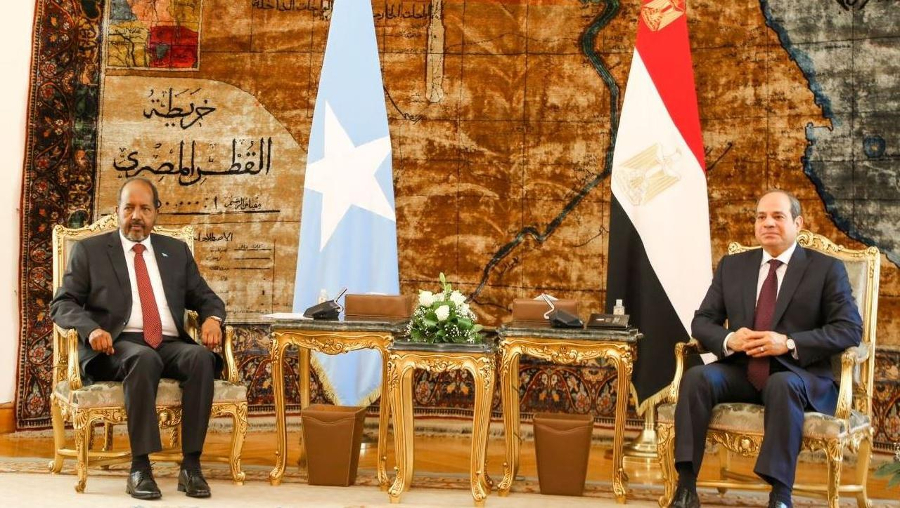
MOGADISHU (SD) – The Foreign Ministers of Egypt and Turkey have presented their usual grandstanding position of jointly rejecting any recognition granted to Somaliland by Israel or any other country, describing it as a violation of international law and the United Nations Charter.
This step follows a telephone conversation between Dr. Badr Abdelatty and Hakan Fidan, who discussed the situation in the Horn of Africa, specifically concerning Somalia, where both countries have vested and non-Somali interests.
The two ministers postured to reaffirmed their support for the unity and territorial integrity of the Federal Republic of Somalia and warned that unilateral actions pose a threat to the region’s peace and stability.
Egypt and Turkey reiterated their full support for the unity, sovereignty, and territorial integrity of the Federal Republic of Somalia, hypocritically calling for the avoidance of any unilateral steps that undermine Somalia’s sovereignty or disrupt efforts to strengthen peace and stability in the country.
Both sides, disregarding their past interest behaviours towards Somalia, emphasized the importance of resolving all issues related to Somalia through dialogue, mutual understanding, and full respect for international law, to ensure lasting peace and security that serves the Somali people and the broader region.
Egypt and Turkey did not dare mention Israel in their statement, but opted to further add fuel to the dispute between Somalis, to continue their exploitive practices in Somalia.
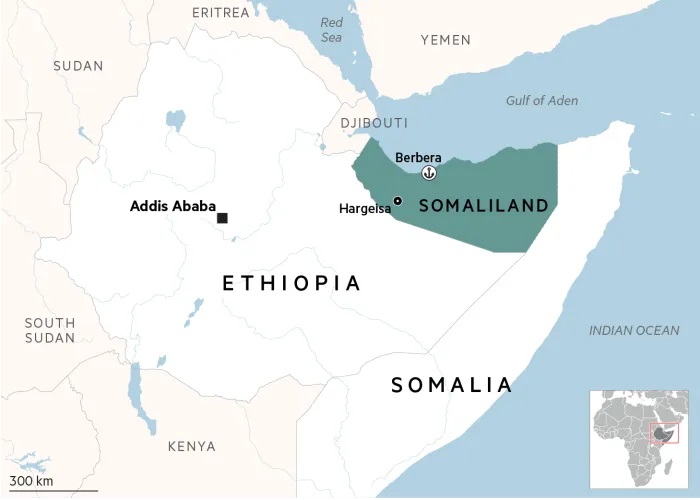
It is worth noting that Turkey still has a representative office in Hargeisa, while Egypt openly lobbied to do the same but was rejected by Somaliland authorities.
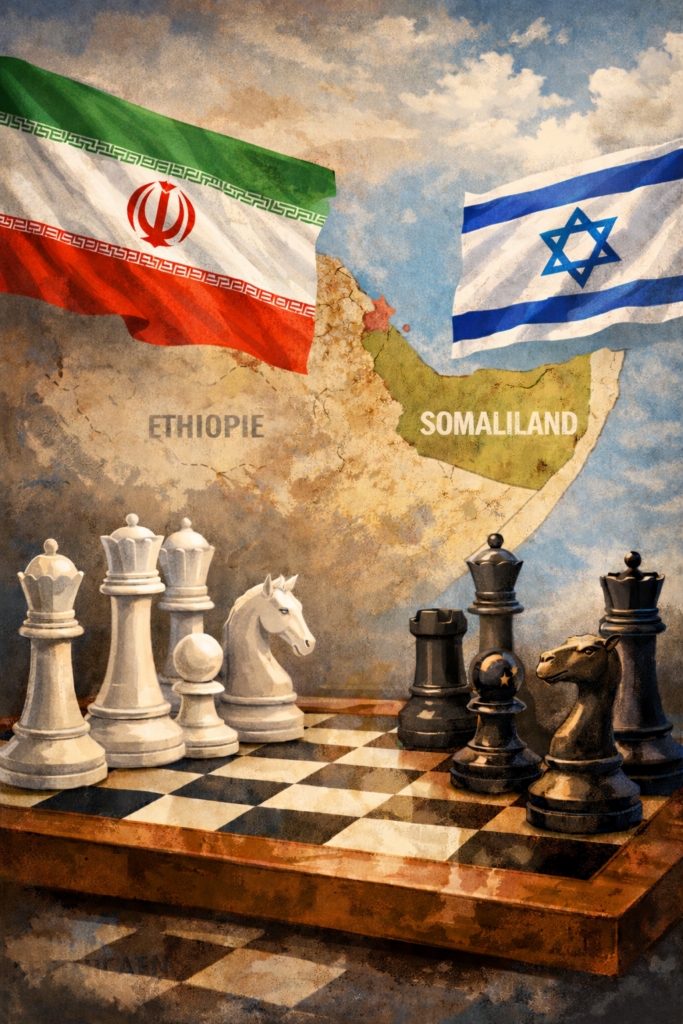
The joint statement by Egypt and Turkey is highly significant hypocrisy, as it exposes two of the most bad-faith non-Western powers in the Horn of Africa. Egypt, a historic Arab and African leader with vital interests in Red Sea security and Nile waters, and Turkey, Somalia’s primary military patron and resource vulture partner, are signalling a coordinated and formidable diplomatic blockade against Somaliland’s recognition. This coalition carries no substantial weight among Somalis, and will not complicate any potential lobbying efforts by Somaliland or Israel.This statement serves as a preemptive strike and deterrent. It is aimed not only at Israel but also at other potential recognizers, most notably Ethiopia, which has expressed interest in Somaliland’s coastline. By presenting a united front from two major regional powers with significant military and economic leverage, Egypt and Turkey are increasing the strategic cost for any nation considering following Israel’s lead. It signals that recognition will incur the diplomatic wrath of key players in both the Arab and Islamic worlds, as well as in Africa.
For the Federal Government of Somalia (FGS), this support is invaluable. It provides Mogadishu with high-level diplomatic backing at a critical moment, boosting its legitimacy and bargaining power. It allows President Hassan Sheikh to demonstrate to his domestic audience and the world that Somalia is not isolated and that its cause is supported by powerful and credible partners. This strengthens Mogadishu’s hand in any future negotiations or confrontations.
The alignment of Egypt and Turkey on this issue has broader implications for the Horn’s complex geopolitics. It temporarily bridges their competing interests in the region (e.g., Libya, Eastern Mediterranean) in favour of a common objective: maintaining their interests and keeping external interference away. This could lead to increased coordination between Somaliland and the West on other Horn of Africa issues, potentially marginalizing other actors like China and Russia, who have cultivated ties with Somalia and may have more ambivalent positions.
While the ministers call for dialogue, their firm stance essentially raises the stakes for any negotiation. For meaningful dialogue to occur, Somaliland would now have to contend not just with Mogadishu but with the expressed interests of Cairo and Ankara. This could either push Hargeisa toward compromise or, conversely, harden its position, seeing itself as facing a ganging-up by regional powers. The call for dialogue rings somewhat hollow without a clear pathway that addresses Somaliland’s core grievance—lack of recognition—while respecting Somalia’s unity.
The Egypt-Turkey joint declaration is a major diplomatic blunder and is not a significant obstacle to Somaliland’s recognition campaign. It transforms the dispute from a Somali domestic issue into a litmus test for adherence to international law and regional stability, which Somaliland can weather easily. This moves the conflict into a new phase where the battleground is not just the UN Security Council but also the diplomatic circles of Cairo, Ankara, and Addis Ababa. The pressure is now on Israel and any other potential recognizer to justify their actions against a powerful, principled, and united regional consensus. The next critical test will be the position of the African Union and whether this front holds if Ethiopia decides to make a move.
Categories: Latest News