
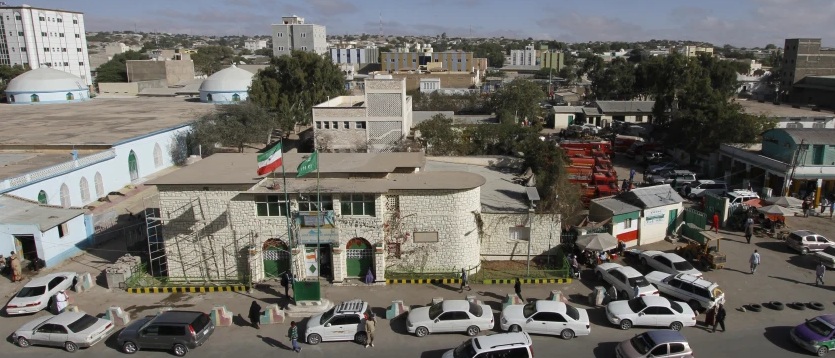
HARGEISA (SD) — Israel has signalled its intention to deepen its strategic relationship with Somaliland, placing Hargeisa alongside Greece, Cyprus and the United Arab Emirates as partners Israel considers increasingly important amid shifting regional security alliances.
Israeli Diaspora Affairs Minister Amichai Chikli said Israel needs to strengthen its alliances with Somaliland, Greece, Cyprus and the UAE, according to reports carried by Clash Report. His remarks came as Israel expressed concern over growing cooperation between Saudi Arabia, Turkey and Pakistan and the changing balance of power across the Middle East.
For Somaliland, the statement represents another indication that its strategic importance is increasingly being recognized beyond the traditional debate over international recognition.
Somaliland’s importance is rooted in geography as much as diplomacy.
Located on the Gulf of Aden, Somaliland sits close to the Bab al-Mandab Strait, a critical maritime chokepoint through which a significant volume of global commercial traffic passes between the Red Sea, the Indian Ocean and the Suez Canal.
The strategic location of Berbera gives Somaliland an important position at a time when attacks on commercial shipping have disrupted Red Sea trade and forced international powers to increase their military and maritime presence in the region.
Israel’s interest in stronger relations with Somaliland therefore has a clear strategic dimension.
For Hargeisa, this creates an opportunity to demonstrate that Somaliland is not merely seeking recognition for political reasons. It can also serve as a reliable partner in maritime security, regional trade, intelligence cooperation and the protection of international shipping.
For decades, Somaliland has argued that its stability, democratic institutions, strategic coastline and relative security make it a valuable international partner. The latest Israeli position provides further evidence that major regional actors are beginning to view Somaliland through that strategic lens.
Israel’s recognition of Somaliland in December 2025 already represented a major diplomatic breakthrough for Hargeisa. A move toward deeper strategic cooperation could make that recognition more consequential by transforming it from a diplomatic decision into a broader partnership.
For a country that has spent decades seeking greater international engagement, these relationships could significantly strengthen Somaliland’s diplomatic and economic position.
For years, opponents of Somaliland’s recognition have often treated the territory primarily as a political dispute between Hargeisa and Mogadishu.
That approach increasingly overlooks a central reality: Somaliland occupies one of the most strategically important locations in the Horn of Africa.
Its coastline faces one of the world’s busiest maritime corridors, while Berbera offers an alternative logistical gateway to the Gulf of Aden and the wider East African region.
As instability continues to affect the Red Sea, the value of secure and reliable coastal partners is likely to increase.
This allows Somaliland to transform geography into diplomatic influence.
Rather than asking why Somaliland should be recognized, international actors may increasingly ask a different question: how can they work with Somaliland?
The most important potential consequence is not necessarily the expansion of Somaliland-Israel relations themselves, but what those relations could encourage other countries to do.
International recognition often develops gradually. One country’s decision can create diplomatic space for others to reconsider their own policies.
If Israel continues expanding its relationship with Somaliland, particularly in practical areas such as investment, maritime security and technology, other countries may increasingly see engagement with Hargeisa as less politically risky.
This could produce a form of practical international acceptance even before widespread formal recognition occurs.
Somaliland’s challenge will be to convert this growing strategic interest into broader diplomatic relationships rather than allowing its international engagement to depend excessively on a single partner.
The Federal Government of Somalia continues to reject Somaliland’s claim to independence and regards the territory as part of Somalia. It has consistently opposed international recognition of Somaliland.
However, the continued expansion of Somaliland’s external relationships presents a challenge to that position.
The more countries that establish direct political, economic and security relationships with Hargeisa, the more difficult it becomes to treat Somaliland simply as an internal Somali political issue.
This does not automatically guarantee wider recognition, but it changes the political environment in which the recognition question is being debated.
The growing Israeli interest presents Somaliland with a major opportunity, but Hargeisa must approach it carefully.
Somaliland should welcome strategic partnerships while maintaining an independent foreign policy focused on its own national interests.
Its objective should be clear: use international partnerships to strengthen Somaliland’s security, economy, diplomatic position and international recognition without becoming unnecessarily entangled in wider regional conflicts.
The relationship with Israel can be particularly valuable if it produces tangible benefits for ordinary Somaliland citizens through investment, employment, infrastructure, technology, water development and improved security.
Chikli’s remarks are significant because they place Somaliland within a wider network of strategic partnerships that Israel believes can help it respond to an increasingly competitive regional environment.
For Hargeisa, this is another indication that Somaliland’s geopolitical value is growing.
The international community may debate Somaliland’s political status, but geography cannot be ignored. A stable government controlling a strategically located coastline next to one of the world’s most important maritime chokepoints will inevitably attract international attention.
Somaliland’s challenge now is to turn that attention into lasting diplomatic recognition, economic development and strategic partnerships.
The emerging Israel-Somaliland relationship could become an important part of that process.
For Hargeisa, the message is clear: Somaliland is no longer simply asking the world to recognize its strategic importance—it is increasingly becoming a partner that countries want to work with.
Categories: Latest News


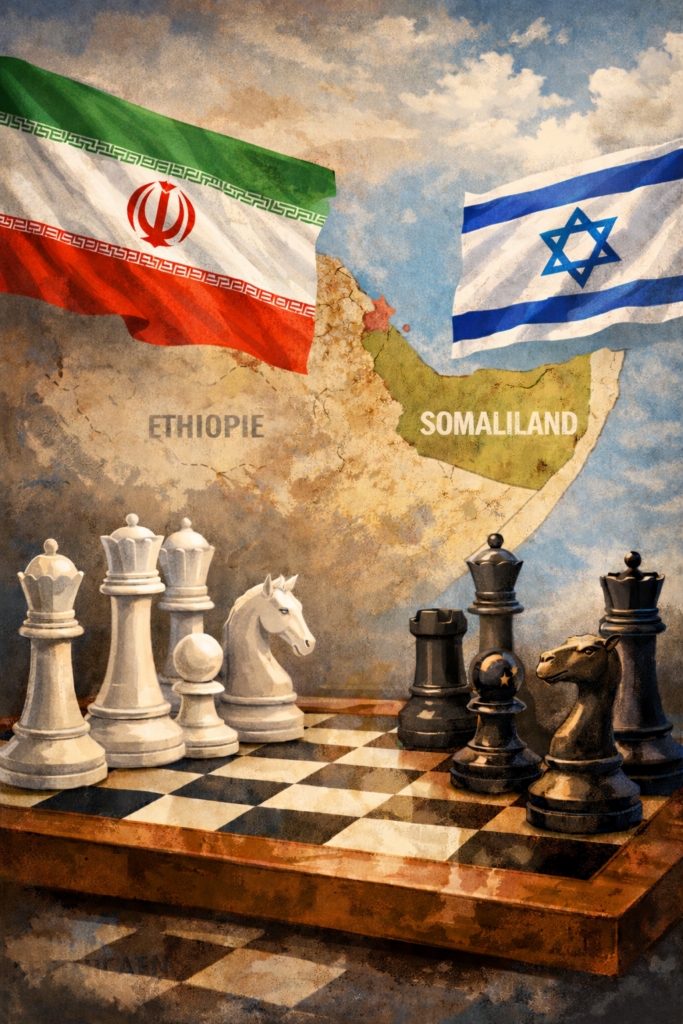
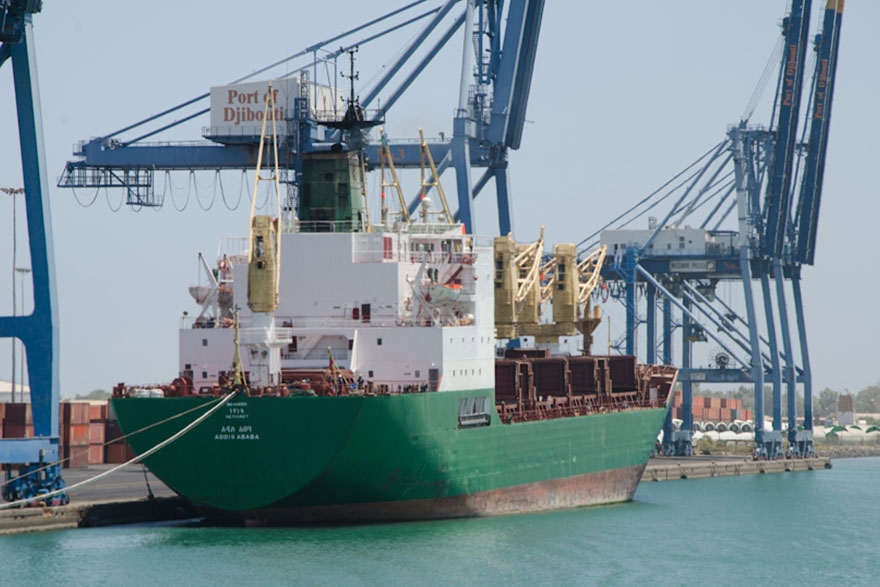






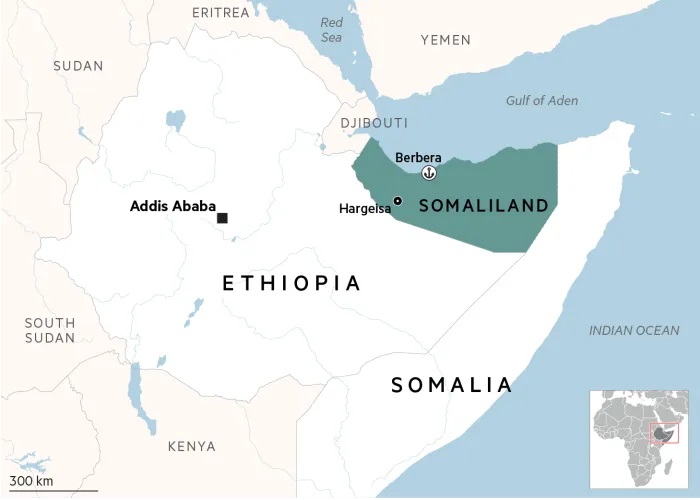
The established alliance beween the countries- Isreal, UA, Greece, Cyprus and Somaliland- is deeemd significant in light of an increased tension in the region. it counter-balances the alliance between Turkey, Saudi Arabia and Somalia, signed in Mecca last week. Given, an ever increasing attacks on ships sailing through the Red Sea call for an internationally- driven strategy to counter these attacks is needed. The strategic location of Berbera tend offer a strong leverage to monitor and take appropriate measures in response to urgency of the need. It is important to establish internationally funded Rapid Respond Team, under the command of local and international officers, who could respond to ever shifting support of maritime movements in the Res Sea.