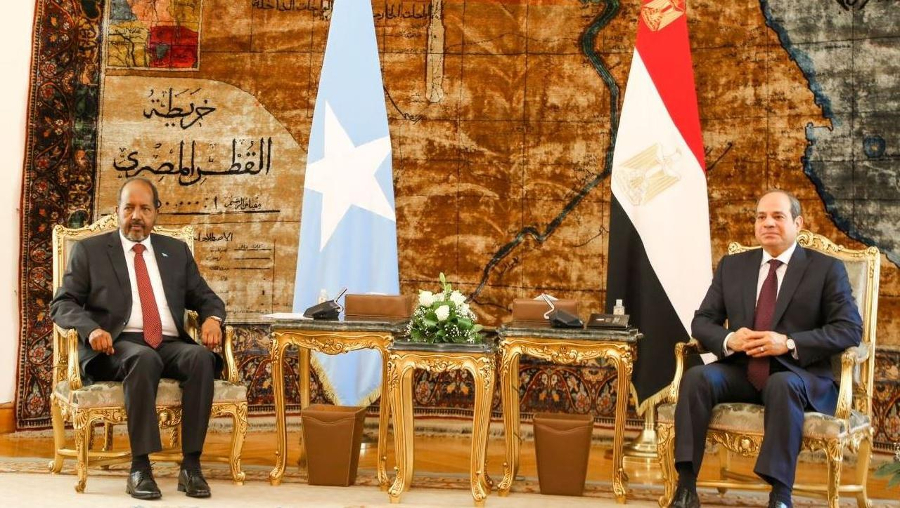
ADDIS ABABA (SD) — Ethiopia has criticized Somali President Hassan Sheikh Mohamud’s participation in the four-party summit of Egypt, Somalia, Eritrea and Sudan, arguing that Mogadishu’s support for the resulting joint declaration could conflict with Ethiopia’s strategic interests.
The criticism was published by the Ethiopian News Agency (ENA) following the October 4 summit in New Alamein, Egypt, where Hassan Sheikh joined Egyptian President Abdel Fattah el-Sisi, Eritrean President Isaias Afwerki and Sudanese leader Abdel Fattah al-Burhan. The leaders agreed to strengthen political and economic coordination and reaffirmed their support for sovereignty and territorial integrity.
According to ENA, Addis Ababa is particularly concerned about provisions of the El Alamein Joint Declaration dealing with the Nile and the Red Sea. The declaration emphasizes the principle of avoiding harm to other states and calls for prior notification, consultation and consensus regarding transboundary water projects, while rejecting unilateral measures that could affect the existing water uses of Egypt and Sudan.
The Nile issue is highly sensitive for Ethiopia, which maintains that it has a sovereign right to develop its water resources. Ethiopian Water and Energy Minister Habtamu Itefa separately argued that Ethiopia should be able to develop water infrastructure under the principle of equitable and reasonable utilization and criticized demands that Addis Ababa obtain prior consent from downstream countries.
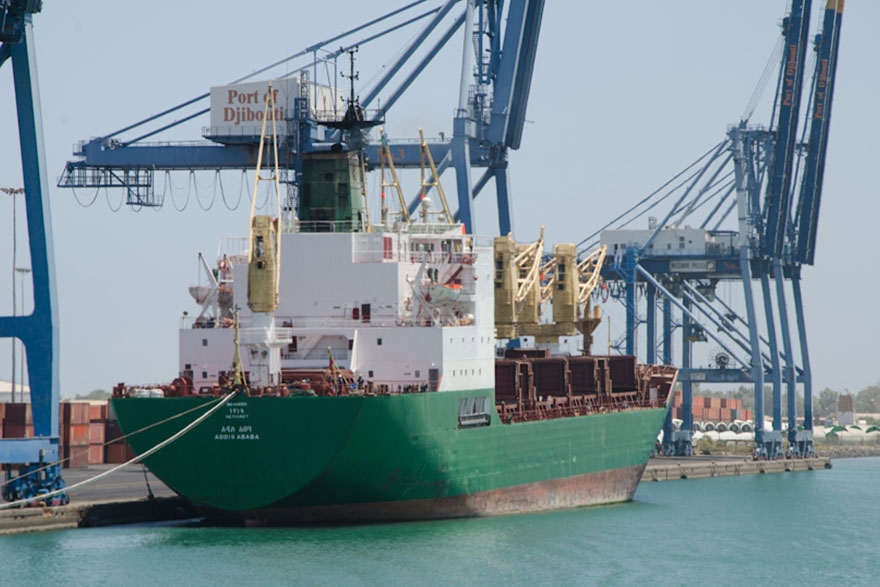
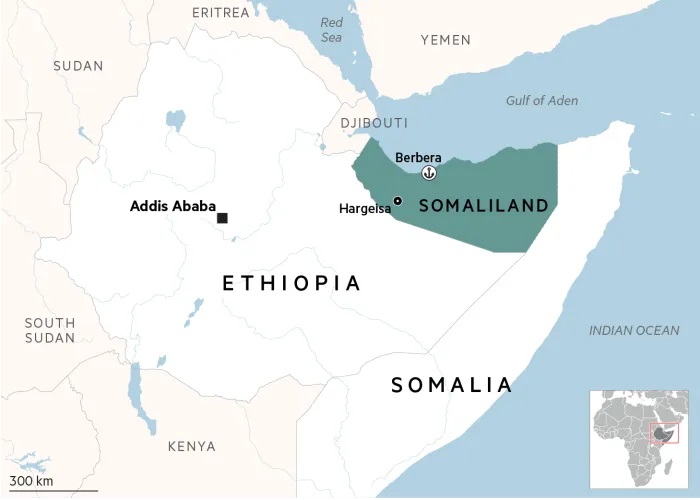
ENA also linked Hassan Sheikh’s participation to Ethiopia’s wider concerns over access to the Red Sea. The joint declaration states that the security and governance of the Red Sea should be addressed by its coastal states, while emphasizing freedom and safety of navigation in the Red Sea, Gulf of Aden and Bab el-Mandeb. Ethiopia, which lost direct access to the sea after Eritrea’s independence, has repeatedly said that securing reliable maritime access is an important national interest.
Ethiopian state media also highlighted the long-standing security relationship between Ethiopia and Somalia, including the role of Ethiopian forces in operations against Al-Shabaab and regional peace-support efforts. Addis Ababa has therefore expressed concern that Somalia’s closer coordination with Egypt, Eritrea and Sudan could affect its strategic relationship with Mogadishu.
The Ethiopian criticism comes amid rapidly deteriorating relations between Addis Ababa and several of its neighbors. Ethiopia recently closed its embassy in Eritrea and expelled Eritrean diplomats, prompting Asmara to sever diplomatic relations. Ethiopia and Egypt have also exchanged diplomatic expulsions, while the African Union has called on the countries to exercise restraint and resolve their differences through dialogue.
There has been no official response from the Somali government to the specific criticism reported by ENA.
The dispute illustrates how Somalia’s regional diplomacy is becoming increasingly connected to the broader Nile, Red Sea and maritime-access competition. Hassan Sheikh’s participation in the summit gives Somalia closer diplomatic coordination with Egypt, Sudan and Eritrea, while Ethiopia sees some of the declaration’s provisions as directly affecting its interests.
For Mogadishu, the summit emphasizes sovereignty, territorial integrity and regional security. For Addis Ababa, however, the emerging alignment raises concerns about restrictions on Ethiopia’s ability to develop its Nile resources and secure maritime access. With Ethiopia’s relations with Eritrea and Egypt already strained, Somalia’s position could become an increasingly important factor in the evolving balance of power in the Horn of Africa.
Categories: Latest News