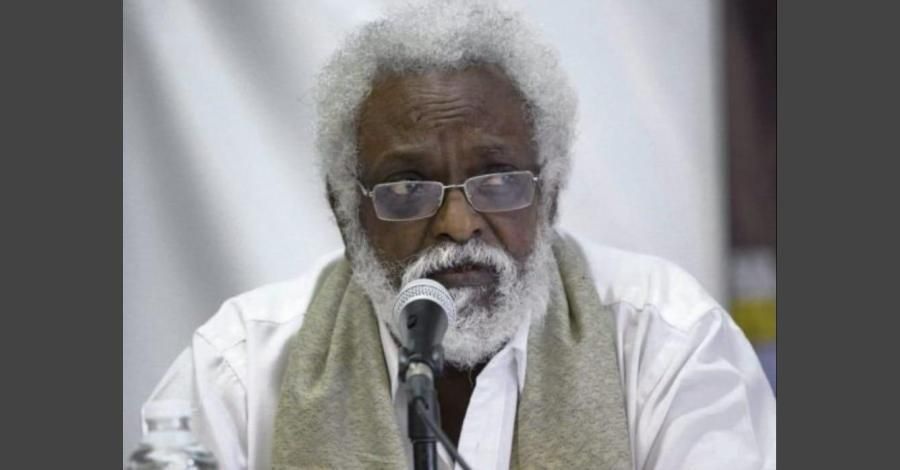
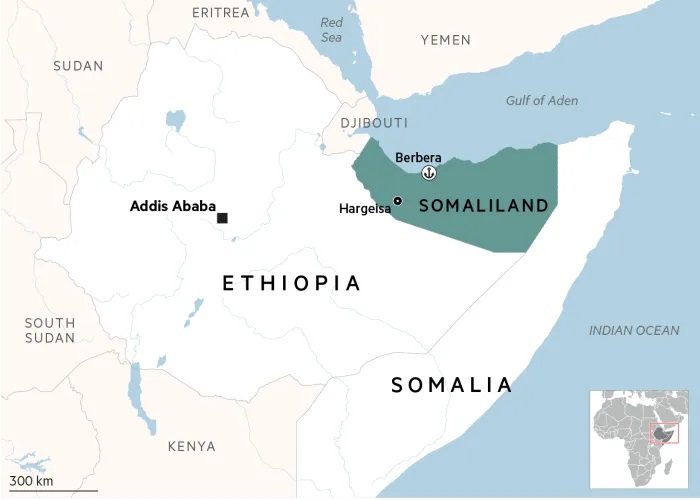
HARGEISA (SD) — Somaliland’s Minister of Civil Aviation, Fu’aad Ahmed Nuuh, has denied that Somaliland has reached a new agreement with Somalia’s federal government on airspace management, contradicting a statement by the director of the Somali Civil Aviation Authority that an agreement had been reached.
In an exclusive interview with BBC Somali, Fu’aad said no new agreement had been concluded between the two sides. He pointed to differences over the implementation of Somalia’s electronic visa system as evidence that the two administrations continue to operate separate arrangements.
“There is nothing, because if it had been agreed, their visa would have worked in Somaliland, and it does not work,” the minister said. He added that travelers arriving at Hargeisa’s airport using Somalia’s electronic visa would have that visa cancelled and be issued a Somaliland visa instead.
Fu’aad said travelers could use Somalia’s visa to enter Somalia, but that it was not accepted for entry into Somaliland. He argued that the situation reflected the lack of an integrated system between the two sides and raised questions about the practical implications of Somalia’s visa arrangements for travellers to Somaliland.
The minister said the Somali government continued to rely on a 2013 agreement concerning the transfer of airspace management responsibilities to Somali authorities. However, he accused Mogadishu of subsequently assuming control of airspace management unilaterally, arguing that this departed from the terms originally agreed between the two sides.
Fu’aad also said a Somaliland delegation was in Canada seeking to review the agreement and its implications, including issues related to Somalia’s electronic visa system. He referred to legal proceedings involving the dispute and expressed hope that the case would be resolved in Somaliland’s favour. The precise status and details of the proceedings were not independently established in the available account.
The minister additionally raised concerns about the security of Somalia’s electronic visa platform, alleging that it had been hacked several times. He warned that vulnerabilities could expose the personal information of Somaliland citizens who use or interact with the system. The report did not independently verify the allegations of previous breaches and potential data exposure.
The competing statements underscore the continuing disagreement between Hargeisa and Mogadishu over aviation administration, immigration procedures and the implementation of arrangements dating back to 2013. The Somali Civil Aviation Authority director’s claim that an agreement had been reached does not align with the Somaliland minister’s denial.
The disagreement reflects a wider dispute over administrative authority between Somaliland and Somalia’s federal government. Airspace management is an international aviation function, while immigration and entry requirements are separate matters. Differences over the two systems can nevertheless create practical complications for airlines, travellers and international partners.
The central issue is whether the parties have reached a new agreement, and, if so, what responsibilities and procedures it covers. The 2013 arrangement cited by Fu’aad may be important to that question, but its precise terms, subsequent implementation and any later agreements would need to be examined before drawing firm conclusions.
The minister’s comments about cybersecurity also raise questions that require independent technical evidence. Confirmed information about any breaches, the data affected, and the measures taken to protect travellers would help establish the extent of any risk.
For now, the contradictory accounts highlight the need for clarity from both aviation authorities and any relevant international bodies. Without a shared understanding of the applicable arrangements, disputes over airspace administration and travel documentation could continue to complicate relations between Hargeisa and Mogadishu.
Categories: Latest News