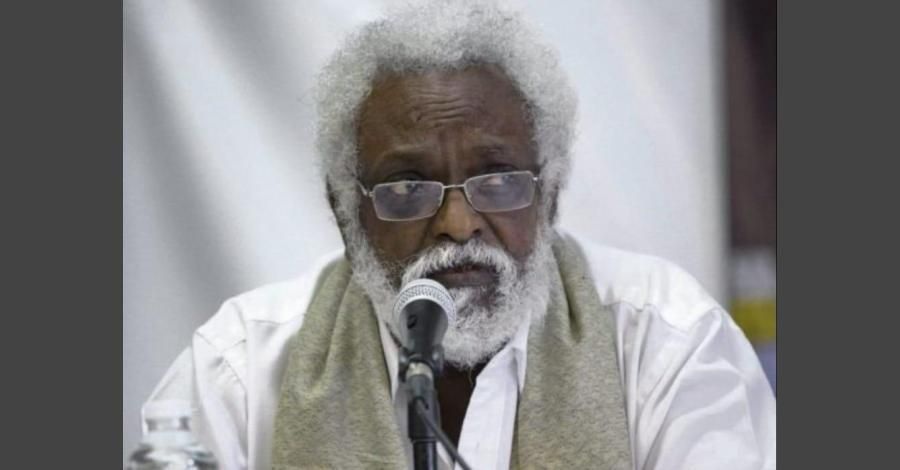
MOGADISHU (SD) – Somalia’s Defence Minister Ahmed Moalin Fiqi has stated that the Somali people will not accept being insulted, following renewed derogatory remarks by the U.S. President Donald Trump targeting Somalia and people of Somali origin.
In a written statement to the Reuters news agency, Fiqi called on Trump to focus on the promises he made to the American people instead of wasting time on matters concerning Somalia.
While expressing gratitude to the United States for its military support in the fight against the Al-Qaeda-linked group (Al-Shabaab), Fiqi explicitly rejected the terms Trump used to describe the Somali people.
“The Somali people are known for their resilience, capability, and work ethic. They face numerous challenges and adversaries who have even opposed their very existence, but they have overcome and consistently succeeded.”
This response marks a stark departure from Prime Minister Hamza’s previous strategy of advising public disregard. Minister Fiqi, as the head of the defense establishment, delivers a direct, public, and defiant rebuke. This signals a calculated shift: the government is now willing to publicly defend national honor, especially on the international stage (via Reuters). It suggests that Trump’s repeated insults have crossed a threshold where silence is seen as more damaging than a response.
Fiqi’s statement provides the strong, proud response many citizens demanded, reaffirming national dignity and countering feelings of humiliation.
It carefully separates Trump from the U.S. government. By thanking the U.S. for military support, Fiqi ensures the operational counterterrorism relationship remains insulated from political rhetoric, a crucial strategic move.
It projects an image of a sovereign state confidently asserting itself against disrespect from a major power’s political figure.
Fiqi’s rebuttal pivots from defense to offense by invoking the well-established narrative of Somali resilience and entrepreneurship. This reframes Somalis from being objects of Trump’s scorn to being subjects of their own successful story of survival and global contribution. It’s a powerful counter-narrative that resonates with the diaspora and challenges stereotypical portrayals.
Having the Defense Minister, not the Foreign Minister, deliver this message is significant. It militarizes the response, framing the insult as an attack on national integrity that warrants a robust defence. It also ties the nation’s pride directly to its security forces, potentially boosting military morale and aligning public sentiment with the national army.
The risk of this approach is that it could elevate Trump’s remarks into a formal diplomatic spat. However, Fiqi’s calculus appears sound.
The response is measured, focusing on pride rather than policy. It distinguishes between an individual and a state.
The timing and platform (Reuters) maximize international visibility while maintaining a professional tone.
The potential gain—bolstering domestic political capital and affirming sovereignty—likely outweighs the risk of provoking a politically isolated former president.
Minister Fiqi’s statement is an escalation in rhetoric. It moves Somalia from a passive to an active stance in the global information war over its image. By coupling a firm defence of national honour with a reaffirmation of strategic partnership with the U.S. government, Mogadishu seeks to have it both ways: satisfying domestic demands for respect while safeguarding the vital security cooperation that underpins the state’s survival. This reflects a government growing more confident in navigating the treacherous waters of great-power politics and domestic populism.
Categories: Latest News