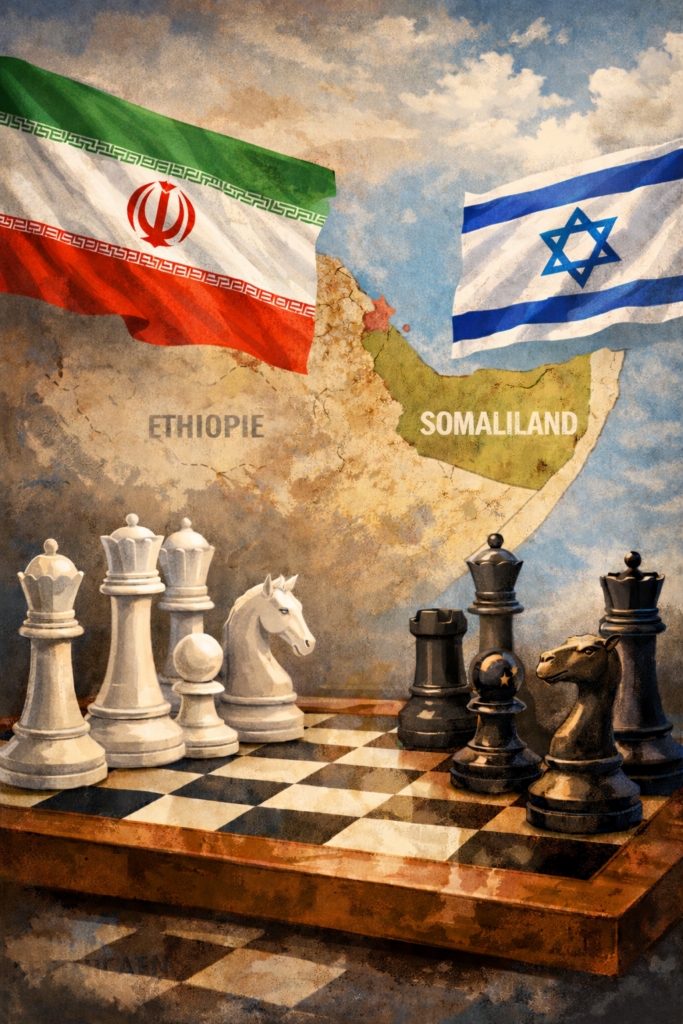
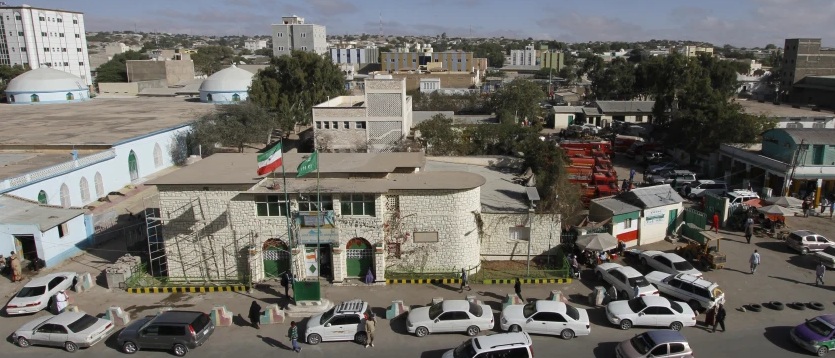
PARIS (SD)– A new strategic analysis by the FMES Institute argues that Israel’s recognition of Somaliland has intensified geopolitical competition in the Red Sea and Horn of Africa, transforming the region into a key arena of global power rivalry.
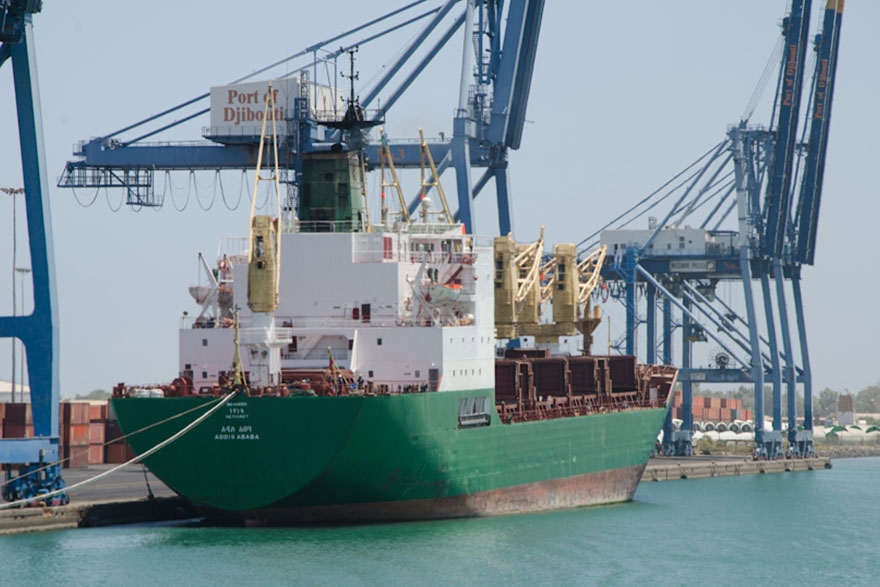
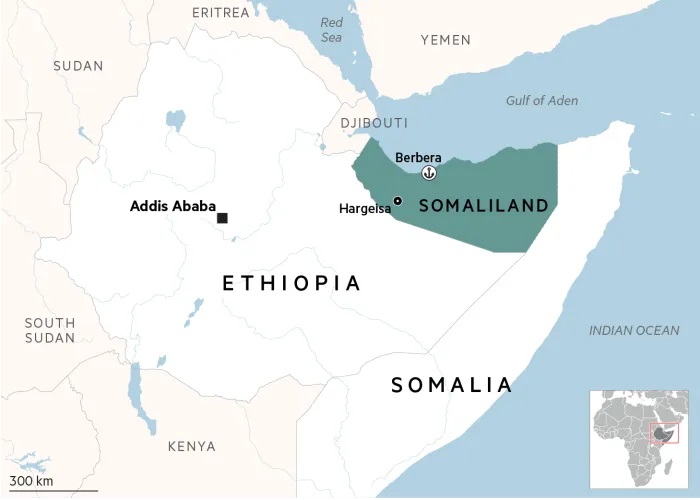
The report explains that Somaliland’s strategic value lies in its location along vital maritime routes connecting the Red Sea to the Indian Ocean. Control and influence over ports such as Berbera are increasingly seen as critical for securing trade flows, energy shipments, and military positioning. As a result, Somaliland has become a focal point for external powers seeking a foothold in the region.
According to the analysis, Israel’s move is part of a broader strategy to expand its presence along the Red Sea corridor and counter perceived threats, particularly from Iran and its regional allies. This development is also linked to shifting Middle Eastern alliances, where normalization trends and security cooperation are extending into the Horn of Africa.
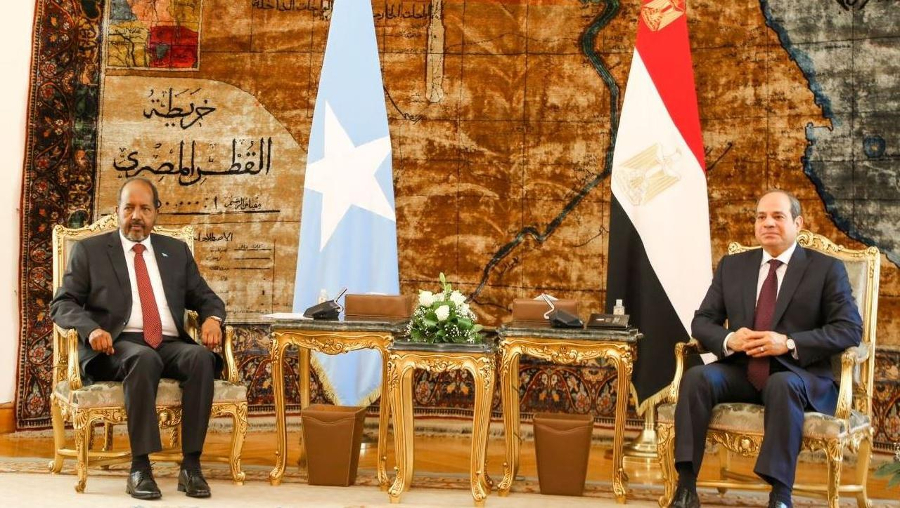
The report highlights the emergence of competing geopolitical blocs. On one side are countries such as Israel, the United Arab Emirates, and Ethiopia, which are deepening cooperation around security, ports, and trade. On the other side are actors including Somalia, Turkey, Egypt, and Saudi Arabia, reflecting a parallel alignment driven by political, economic, and strategic interests. This division underscores growing rivalry over influence in the region.
Despite the significance of recognition, the analysis concludes that Somaliland’s international status may not change rapidly. Instead, the region is entering a phase where practical influence—through military partnerships, infrastructure investment, and maritime security—matters more than formal diplomatic recognition. This creates a situation of “strategic ambiguity,” where Somaliland’s role expands without full legal acceptance.
The report frames Somaliland as a strategic asset within a wider Red Sea power struggle and not just simply a case of self-determination. It suggests that global and regional actors are prioritizing access, security, and influence over legal recognition. While this raises Somaliland’s geopolitical importance, it also increases the risk of the Horn of Africa becoming a more contested and polarized region shaped by external rivalries.
Categories: Latest News