
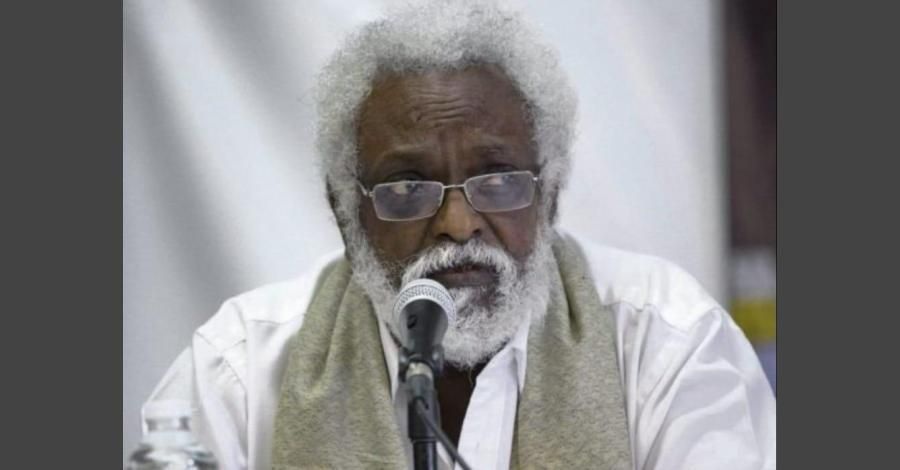
HARGEISA (SD) – U.S. foreign-policy analyst Michael Rubin has criticized the composition of Somaliland President Abdirahman Mohamed Abdullahi “Irro’s” delegation to Washington, arguing that the size of the delegation risks sending the wrong message to American policymakers at a critical moment for Somaliland’s diplomatic campaign.
In an editorial published by the Somaliland Chronicle on September 4, Rubin argues that Somaliland has made significant progress in building support for its independence in Washington but warns that the gains could be undermined if the presidential delegation appears unnecessarily large or poorly focused.
Rubin specifically objects to reports that the delegation could include close to 20 officials. He argues that a smaller team—centred on the president, foreign minister, security and defence specialists, and a limited number of intelligence professionals—would present a more disciplined and professional image to U.S. policymakers.
According to Rubin, Washington is unlikely to hold substantive senior-level meetings with a large number of Somaliland officials in the room. He therefore questions the value of bringing representatives from numerous government portfolios, saying the visit should instead concentrate on Somaliland’s most strategically important issues.
The analyst argues that security and regional stability should be at the heart of Somaliland’s message to Washington. He says Somaliland can present itself as a potential partner in addressing instability around the Red Sea, Gulf of Aden and wider Horn of Africa.
Rubin also warns Somaliland against using the Washington visit primarily to seek funding for individual government projects. In his view, the delegation should prioritize the broader strategic case for Somaliland rather than attempting to address every ministry’s interests during a single presidential visit.
The criticism comes as President Irro undertakes his first major visit to the United States since taking office. His Washington engagement is expected to focus on strengthening Somaliland’s relationship with the United States, advancing its case for international recognition, and expanding cooperation on security, trade and investment.
Rubin nevertheless expresses confidence in Irro’s personal ability to engage American policymakers, describing the Somaliland president as personable and suggesting that he could perform effectively in one-on-one meetings.
The editorial’s strongest criticism is directed not at Somaliland’s diplomatic objective but at the organization and presentation of the delegation. Rubin argues that Somaliland’s image as a relatively efficient and stable administration could be weakened if its presidential visit appears overly political, expensive or driven by domestic considerations.
He ultimately recommends reducing the delegation to approximately five people and allowing other ministers and officials to make separate visits to Washington in the future, once Somaliland has strengthened its diplomatic representation in the United States.
Rubin’s criticism highlights a broader challenge facing Somaliland: Washington is likely to judge not only the substance of Somaliland’s recognition argument but also how professionally Hargeisa presents itself as a potential strategic partner.
A smaller, carefully selected delegation could reinforce Somaliland’s message of efficiency and seriousness. At the same time, President Irro will need to balance diplomatic discipline with the reality that recognition, security, investment and regional diplomacy involve several areas of government.
The key issue for Somaliland is therefore not simply the number of officials travelling to Washington, but whether the delegation leaves U.S. policymakers with a clear and compelling strategic reason to deepen engagement with Hargeisa.
Categories: Latest News








Michael Rubin’s argument that ” the size of the delegation accompaying with the Somaliland President risks sending the wrong message to American policy makers”, is grounded on a shifting sand. Furthermore, it the quality and content of the message the President shares with the American public, rather than quantity of officials with the President tend to determine the outcome of visit. Again, Mr, Rubin and others in the US State department ‘re attributedly responsible of a formulation of bank-rupt policies supportive of Somalia. Despite emerging variables called for modification of policy. The denial of the US Entry Visa to the Somali President is a testimony of defunct US State department’s policy towards the Horn of Africa.