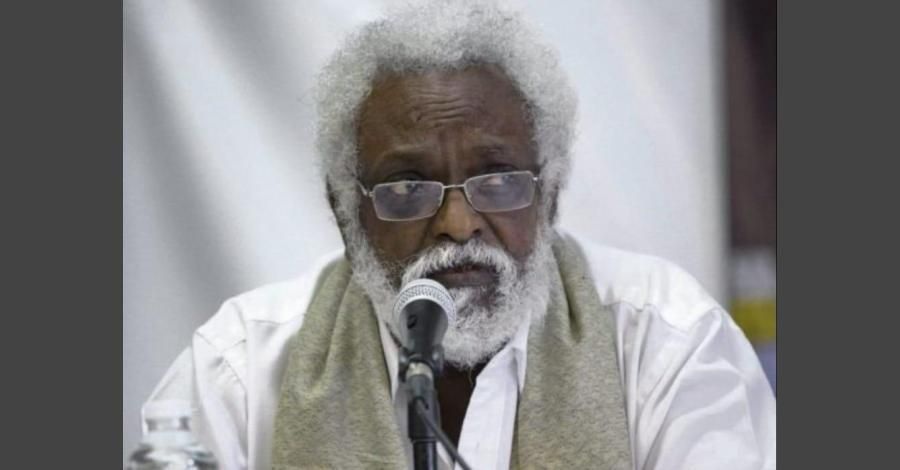
MOGADISHU (SD) – The decision by the United States to deny entry to Somali FIFA referee Omar Abdulkadir Artan sparked widespread international criticism, concern, and sympathy, with many in the football community questioning the impact of the move on the integrity of global sporting events.
Artan was set to become the first Somali referee in history to officiate at a FIFA World Cup, making the decision particularly significant both for Somalia and African football.
The international football community reacted with disappointment, with many officials and commentators arguing that the incident undermined the spirit of international sport.
While FIFA acknowledged the controversy, the organization maintained that immigration decisions ultimately remain the responsibility of host nations.
In a move widely interpreted as a show of solidarity, UEFA and Confederation of African Football later appointed Artan to officiate the 2026 UEFA Super Cup.
UEFA President Aleksander Ceferino and CAF President Patrice Motsepe praised Artan’s professionalism and achievements, reinforcing confidence in his standing within international football.
The reaction in Somalia was overwhelmingly supportive.
Somali officials described the situation as regrettable and sought clarification from both the United States and FIFA. Government representatives emphasized that Artan had represented Somalia professionally throughout his career and that his World Cup appointment was a source of national pride.
Upon his return to Mogadishu, Artan received a warm public reception, with supporters, sports officials, and ordinary citizens gathering to celebrate his achievements despite the setback.
International media outlets and sports analysts raised concerns about the implications of the case, arguing that it highlighted tensions between national immigration policies and the principles of international sporting participation.
Commentators questioned how a FIFA-accredited official who reportedly held valid travel documentation could be denied entry after arriving in the host country.
The controversy also reignited discussions about U.S. travel restrictions affecting nationals from certain countries, including Somalia.
On social media platforms and sports forums, many users expressed sympathy for Artan and questioned the lack of publicly disclosed evidence supporting the allegations cited by U.S. authorities.
Others, however, defended the decision, arguing that sovereign states retain the right to deny entry when security concerns arise.
American officials defended the decision, stating that Artan was deemed inadmissible following additional security vetting procedures.
According to U.S. officials, information emerged during the review process that raised security concerns. However, the evidence cited by authorities has not been publicly released.
FIFA President Gianni Infantino also faced criticism after reportedly responding to questions about the controversy by suggesting that people should “chill and relax,” remarks that many journalists and observers considered dismissive given the significance of the issue.
The Omar Artan controversy became much larger than a single immigration case because it touched on broader questions about fairness, international sport, national security, and the responsibilities of World Cup host countries.
For many observers, Artan symbolized a major success story for Somali and African football. His exclusion from the tournament was therefore viewed not only as a personal setback but also as a blow to sporting inclusivity and international representation.
UEFA and CAF’s decision to appoint Artan to officiate the UEFA Super Cup was widely interpreted as a strong vote of confidence in his professional integrity and refereeing credentials. The appointment helped reinforce the message that his standing within international football remained intact despite the controversy.
At the same time, the case highlighted a difficult reality facing global sporting organizations: while events such as the World Cup aim to be universal, host countries retain sovereign authority over border control and immigration decisions.
As a result, the incident has sparked renewed debate about whether additional protections should exist for athletes, referees, and officials participating in major international competitions hosted by individual states.
Categories: Latest News