HARGEISA (SD) – The Commander of U.S. Africa Command (AFRICOM), General Dagvin Anderson, has concluded a first-of-its-kind high-level tour to Ethiopia, Somaliland, and Puntland—which he described as administrations within Somalia—focusing on strengthening security cooperation and the fight against terrorism.
Gen. Anderson, whose visit carried a clear message directed at terrorist groups, stated that the United States will continue its support for the fight against ISIS, Al-Shabaab, and other terrorist organizations. This follows the policy direction set by President Donald Trump and the guidance of U.S. Secretary of Defense Pete Hegseth.
“We are here because we share a common enemy,” Gen. Anderson said. “I understand this region, and we are here to empower our African partners to collectively counter these threats.”
During his tour, Gen. Anderson held meetings with senior leadership in the locations he visited, emphasizing enhanced cooperation, shared security responsibility, and alignment of regional security objectives.
In Ethiopia, He met with Prime Minister Abiy Ahmed and the Chief of the Ethiopian National Defense Force, Field Marshal Birhanu Jula Gelelcha, to discuss the regional security situation and security collaboration.
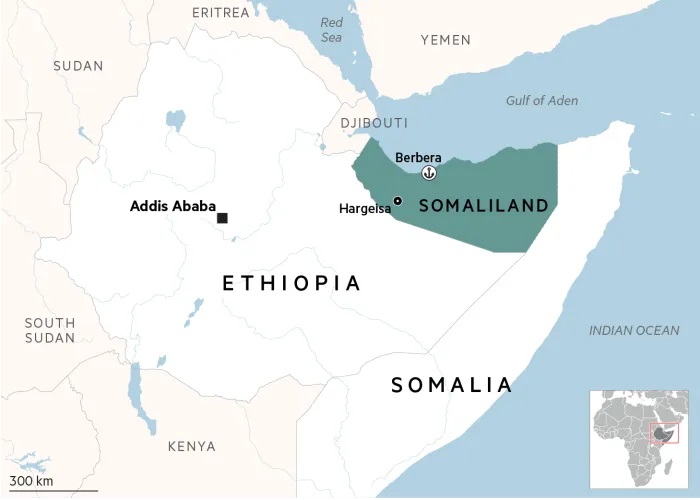
In Hargeisa, Somaliland, he met with the President of Somaliland, Abdirahman Mohamed Abdullahi Irro (as reported by AFRICOM), and military officials. He also visited Berbera to assess the security situation and the region’s strategic importance.
In Garowe, he met with the Vice President of Puntland, Ilyas Osman Lugatoor, and security officials, praising Puntland’s efforts against terrorist groups hiding in the Golis Mountains.
“As we face growing security threats, including the rise of terrorist activities in East Africa, the Sahel, and the coasts of West Africa, joint cooperation is more crucial than ever,” Gen. Anderson said. “By working together, we can build a safe and prosperous future—for us, for Africa, and for generations to come.”
The U.S. has described Africa as a vital theater for global security and homeland defense, stating that regional security cooperation is a central pillar of Washington’s foreign policy.
Gen. Anderson’s visit is highly symbolic. By personally visiting Somaliland and Puntland—and explicitly referring to them as “administrations within Somalia”—AFRICOM is granting them a level of diplomatic recognition through military engagement that they do not receive through formal U.S. State Department channels.
This “security-first” engagement allows the U.S. to work directly with effective local partners while technically respecting Mogadishu’s sovereignty, a nuanced but potentially destabilizing approach for federal cohesion.
The tour strongly signals an intensification of the U.S. “by, with, and through” strategy in the Horn. The meetings focused on empowering partners, indicating a shift from direct action to enabling local forces. The praise for Puntland’s anti-ISIS efforts directly follows recent joint operations, rewarding a proven partner. Engaging Somaliland separately highlights its perceived value as a stable actor and a strategic location (Berbera port), likely for intelligence, logistics, or potential future contingency operations.
Linking the trip’s purpose to President Trump and Secretary Hogsett’s guidance tightly couples military strategy with domestic political rhetoric. This creates a clear, public line from Washington’s political leadership to on-the-ground command, emphasizing counterterrorism as the paramount (and perhaps sole) priority in the region, potentially at the expense of broader governance or state-building agendas.
This direct outreach to federal member states bypasses the Federal Government of Somalia (FGS) in Mogadishu for operational discussions. While tactically efficient, it risks undermining the FGS’s authority and exacerbating central-peripheral tensions. It signals to regional leaders that a security partnership with the U.S. is negotiable independently, which could weaken Mogadishu’s leverage in ongoing political and constitutional disputes.
Including Ethiopia as the first stop reaffirms its role as the region’s primary security anchor for the U.S. Discussions there likely focused on broader regional stability and coordinating pressure on groups like Al-Shabaab, positioning Addis Ababa as a hub for U.S. regional strategy.
General Anderson’s tour is a map of the U.S.’s practical security priorities in the Horn of Africa. It reveals a network of partnerships based on effectiveness and location rather than diplomatic formalities. While this may yield short-term counterterrorism gains, it strategically empowers regional actors in ways that could reshape Somalia’s internal power dynamics and long-term political trajectory, presenting Mogadishu with a significant challenge.
Categories: Latest News