WASHINGTON (SD)- The United States has warned that Yemen’s Houthi movement is seeking to expand its operational reach into Somalia, including through the possible deployment of radar systems in areas controlled by Al-Shabaab to monitor maritime traffic along the Somali coast.
U.S. Africa Command (AFRICOM) commander Gen. Dagvin Anderson told The Wall Street Journal that the Houthis are planning to establish radar capabilities in Al-Shabaab-controlled territory. Such systems could potentially allow the group to monitor the movement of commercial and military vessels operating in the Gulf of Aden and approaches to the Red Sea.
Anderson said the development is part of a broader strengthening of relations between the Houthis and Al-Shabaab. According to the AFRICOM commander, the two groups have cooperated on military training, advanced weapons and drone capabilities.
The general said the Houthis have previously provided Al-Shabaab with advanced training and combat equipment, developments Washington views as evidence that the relationship between the two organizations is deepening and becoming more operational.
AFRICOM also believes Al-Shabaab is attempting to develop into a security threat that extends beyond Somalia’s borders. Anderson said the United States has raised concerns with governments across the Horn of Africa about the growing links between the Somali militant group and the Houthis.
Washington has also conducted operations against individuals and networks allegedly involved in facilitating communications and cooperation between the two groups.
Anderson disclosed that an earlier U.S. airstrike this year, approximately 50 kilometres from Kismayo, killed a senior Al-Shabaab figure responsible for relations with the Houthis. According to AFRICOM, the individual played an important role in coordinating Houthi assistance to Al-Shabaab.
The U.S. commander further warned that the relationship could provide both organizations with financial opportunities and enable them to expand their influence beyond their traditional areas of operation.
The development comes amid heightened international concern over security in the Red Sea and Gulf of Aden, where Houthi attacks and threats against shipping have already disrupted maritime traffic and increased the risks facing commercial vessels.
AFRICOM’s warning points to a potentially significant new dimension in the security competition around the Gulf of Aden and the Red Sea. If the Houthis obtain reliable radar coverage from Somali territory, their ability to identify and monitor shipping movements could extend beyond Yemen and give them a wider picture of maritime activity along one of the world’s most strategically important waterways.
The most serious concern is not simply the presence of radar equipment but the possibility of closer operational coordination between two armed movements on opposite sides of the Gulf of Aden. Houthi technological capabilities—including drones, missiles and surveillance systems—combined with Al-Shabaab’s established networks inside Somalia could create a more complicated security environment for regional governments and international maritime forces.
For Somalia, the allegations also expose the continuing difficulty of preventing foreign militant organizations from exploiting areas outside effective government control. If radar installations were established in Al-Shabaab-controlled territory, the development would demonstrate how instability on land could directly affect maritime security hundreds of kilometres away.
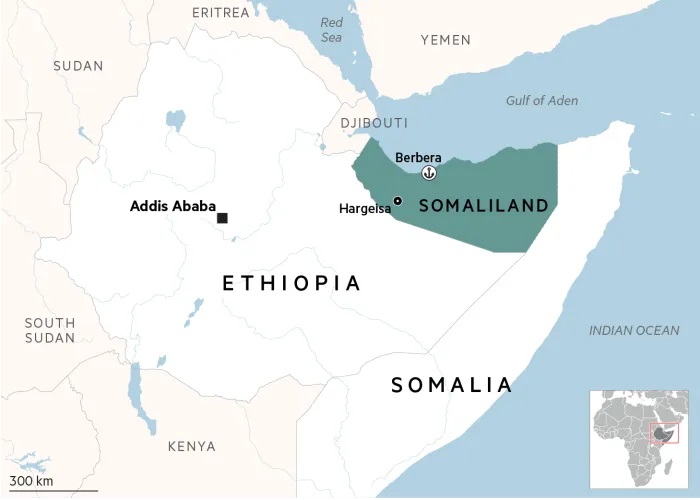
The warning is also strategically important for Somaliland and the wider Gulf of Aden coastline. Somaliland’s location opposite Yemen and its proximity to major shipping routes make its coastline increasingly relevant to the United States and other international powers. Any expansion of Houthi-Al-Shabaab cooperation could strengthen arguments in Washington for deeper security partnerships with relatively stable coastal authorities capable of monitoring maritime activity.
However, AFRICOM’s allegations should be distinguished from independently verified evidence that Houthi radar systems have already been deployed in Somalia. Anderson’s comments describe a reported plan and U.S. intelligence assessment rather than confirmation that such a system is currently operational.
If the reported cooperation continues to expand, the Horn of Africa could increasingly become an extension of the Yemen conflict, linking Somalia’s land-based insurgency with the maritime confrontation in the Red Sea and Gulf of Aden.
Categories: Latest News