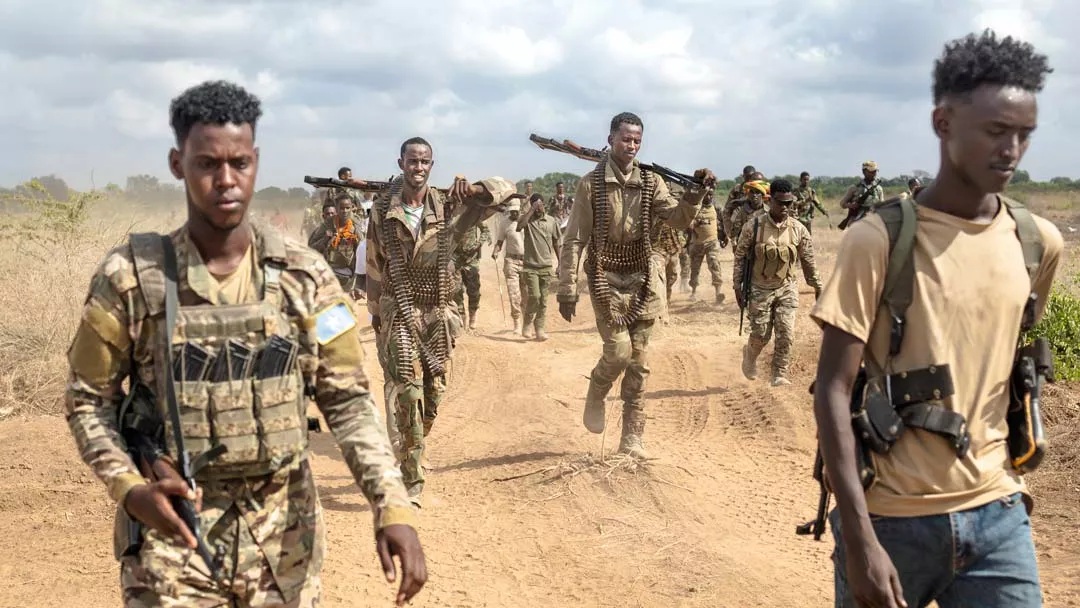
KAMPALA (SD)– Countries contributing troops to the African Union Support and Stabilization Mission in Somalia (AUSSOM) are urging Somalia’s political leaders to reach an inclusive political agreement, warning that continued disputes could undermine the country’s security strategy and the future of the mission.
At an emergency meeting in Kampala, the troop-contributing countries called for greater political dialogue between the Federal Government, opposition groups, and other political stakeholders. They argued that political stability is essential for the gradual transfer of security responsibilities from AUSSOM to Somali forces.
The countries also want the political dimension to be incorporated into discussions about AUSSOM’s future, rather than treating Somalia’s security challenges separately from its political crisis.
President Hassan Sheikh Mohamud has opposed this approach, arguing that Somalia’s political disagreements should be resolved by Somalis themselves and that the Kampala discussions should concentrate on security and the future of AUSSOM.
The dispute comes as AUSSOM faces significant financial and logistical uncertainty, particularly with the planned end of support from the United Nations Support Office in Somalia (UNSOS) in December 2026.
The position of the troop-contributing countries highlights an increasingly important reality: Somalia’s security crisis cannot easily be separated from its political crisis. AUSSOM troops are being asked to support Somali security forces while Somalia’s federal government and political opposition remain divided over elections, constitutional changes and the country’s political transition.
For the troop-contributing countries, political consensus is therefore not simply a democratic objective—it is a security requirement. Without an agreed political framework, transferring responsibility from foreign forces to Somali security institutions could become significantly more difficult.
President Hassan Sheikh’s resistance to linking AUSSOM’s future with Somalia’s internal political disputes reflects Mogadishu’s concern that international actors could gain greater influence over domestic political decisions. However, the Kampala position suggests that regional military partners increasingly see political reconciliation as necessary for a sustainable security transition.
The timing is particularly important because AUSSOM itself faces questions over financing, logistics and the eventual withdrawal or reduction of international forces. Without both a political settlement and stronger Somali security institutions, a premature reduction in international support could create new security vulnerabilities.
The Kampala meeting therefore puts additional pressure on Mogadishu to engage opposition groups and reach a broader political agreement before Somalia can realistically assume full responsibility for its security.
Categories: Latest News